

Before You Unpack Holiday Decorations: A Houston Pest Checklist
Key Points
- Check holiday storage boxes for droppings, chewed packaging, nesting material, or live pests before unpacking them in the house.
- Do not dry sweep or vacuum rodent waste. Contaminated cardboard and cleanable hard containers need different handling.
- Inspect the storage area and building access points so cleanup does not leave the pest entry problem unresolved.
Check Stored Decorations Before Bringing Them Into the House For Pest
Before you unpack holiday decorations, check the containers and the storage area for droppings, chewed packaging, nesting material, or live pests. If you find suspected rodent waste, stop unpacking that container. Do not shake out decorations or carry an open, contaminated box through the house.
At On Point Pest and Environmental Services, we look beyond the damaged box. A rodent problem in a garage or attic also calls for checking the building openings and nearby food or shelter that could keep the activity going. Replacing the cardboard without addressing those conditions leaves the larger problem unresolved.
Where to Look in a Houston Garage or Attic For Pest
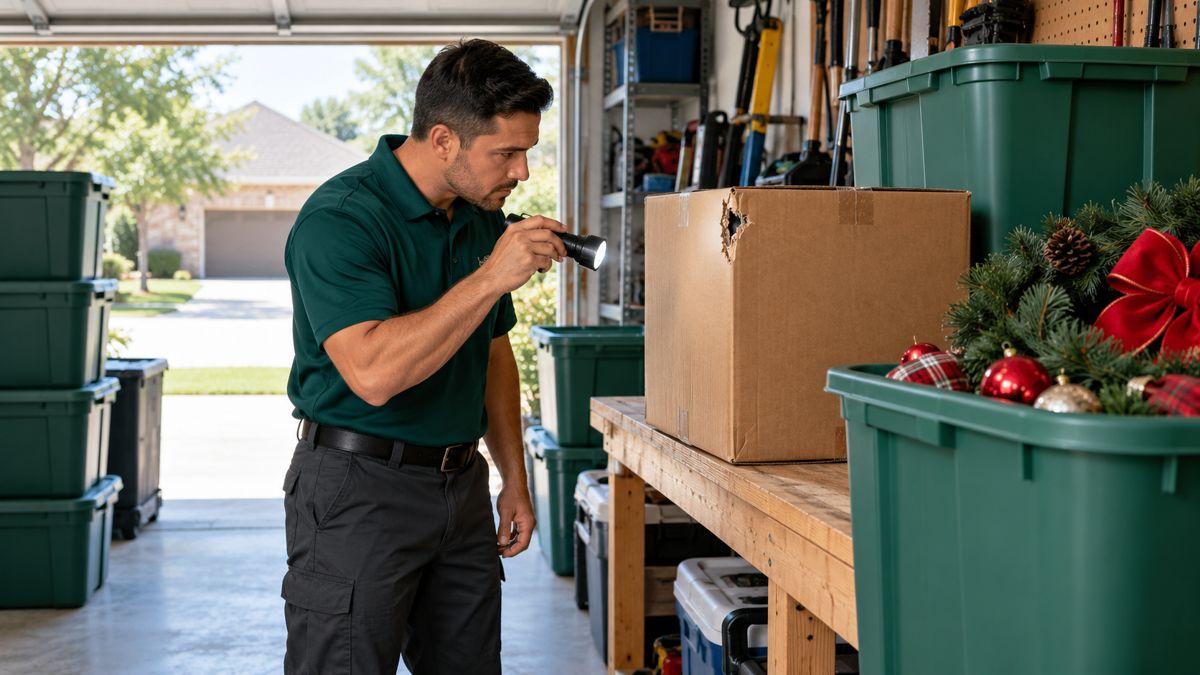
Start where you can stand safely. Use a flashlight to check the bottom corners of boxes, lid edges, and nearby shelving. Note any loose material pulled into a sheltered corner. Do not put your hand into a box you cannot see inside or walk across an unfinished attic to reach decorations.
In a garage, check the area beside the overhead door, the bottom of the side door, and openings around pipes or cables. In an attic, tell the inspector if the affected boxes are near an exterior wall, vent, or roof edge. Those details help connect the stored-item evidence with a possible entry route. The CDC’s rodent prevention guide identifies doors, utility openings, eaves, soffits, and attic vents as places to inspect for access.
A house with a garage-door gap needs a different repair discussion from a house with a damaged roof vent. Homeowners in Houston, Spring, and Cypress should describe the actual opening or storage location when calling. The repair should match the structure and evidence found.
What Do Chewed Boxes and Droppings Tell You?
Rodents can damage stored packaging and use sheltered spaces for nesting. Utah State University Extension’s mouse guidance also notes that mice can be carried indoors in boxes and pallets. Inspecting a box before moving it is a practical way to avoid transporting a hidden pest.
| Evidence | What to do next |
|---|---|
| Chewed cardboard with shredded material inside | Stop sorting the contents. Photograph the outside and identify the storage location for the inspector. |
| Droppings on a lid, shelf, or decorations | Keep people and pets away from the affected material. Plan cleanup before handling it. |
| Live roaches or egg cases in packaging | Check other containers in the same storage area and request identification before choosing treatment. |
| A damp box with no visible pest evidence | Check for a leak or moisture source. Damp cardboard alone does not establish an infestation. |
Do not identify rats, mice, or wildlife from a single sound or dropping. A technician can assess the combination of tracks, damage, nesting, and access. If rats are confirmed, our Houston rat removal and exclusion service addresses active rodent activity and structural entry concerns.
Can You Keep Decorations After Rodent Contamination?
The answer depends on the material and whether it can be cleaned properly. The CDC’s cleanup guidance recommends discarding cardboard contaminated with rodent urine or droppings. Hard plastic, glass, and metal containers can be disinfected; washable fabrics require different handling.
Do not dry sweep or vacuum rodent waste. For extensive attic contamination, inaccessible material, or evidence in ventilation equipment, obtain professional help. Do not spray liquid into electrical decorations or assume an item is clean because the odor is gone.
Cleaning a plastic tub does not clean everything stored inside it. Sort the recovery decision by material: the washable tree skirt, hard ornaments, paper keepsakes, and light strings may each need a different decision. If safe cleaning cannot be established for a contaminated item, do not put it back into use.
How to Store Clean Decorations After the Pest Problem Is Addressed
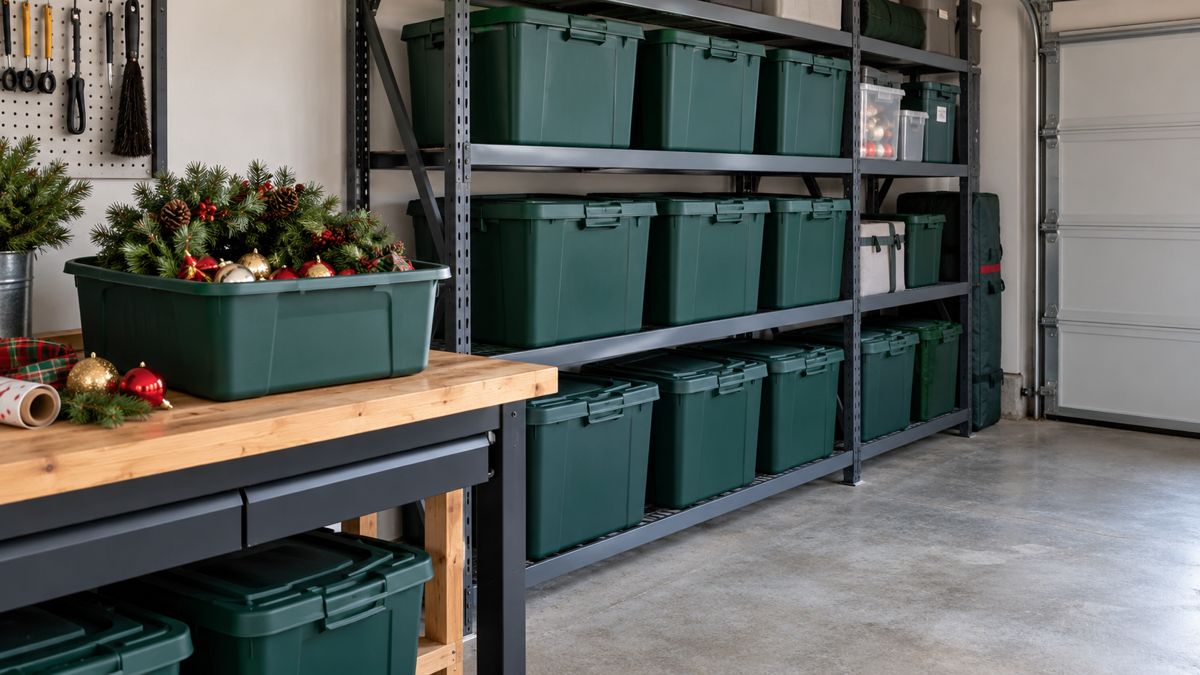
Use sound containers with secure lids and remove unnecessary cardboard from the storage area. Leave enough access around shelving to inspect the wall and floor. Keep pet food and food-based decorations out of loosely closed storage boxes. The EPA recommends checking packages for pests and reducing food, moisture, and clutter that support infestations.
Before putting clean items away, check whether exclusion repairs are complete and whether monitoring still shows activity. A new container helps organize storage; it does not repair a door gap or roof opening.
How On Point Addresses a Storage Pest Problem
- Inspect the evidence: Identify the affected storage area and assess signs of an active pest problem.
- Address the pest: Recommend control based on the animal or insect identified.
- Check access and damage: Explain entry concerns and any needed repairs. Do not block a suspected wildlife entrance without assessing animals that may remain inside.
- Plan cleanup and prevention: Identify contaminated materials and explain whether attic remediation is appropriate.
Holiday Storage Pest Questions
Does a sealed plastic tub keep every pest out?
Does finding rodent waste mean all attic insulation must be replaced?
Are November and December the only months to check stored boxes?
Get the Storage Area Checked Before Unpacking
Found chewed containers, droppings, or an animal near your decorations? Call 281-323-2863 or schedule a free inspection. Tell us whether the problem is in the attic, garage, or another storage space so we can assess the pest, entry concerns, and cleanup needs.

Written by
Joe McDaniel
Owner, On Point Pest and Environmental Services
